Friday, 19 June 2015
Energy Assignment Part 2
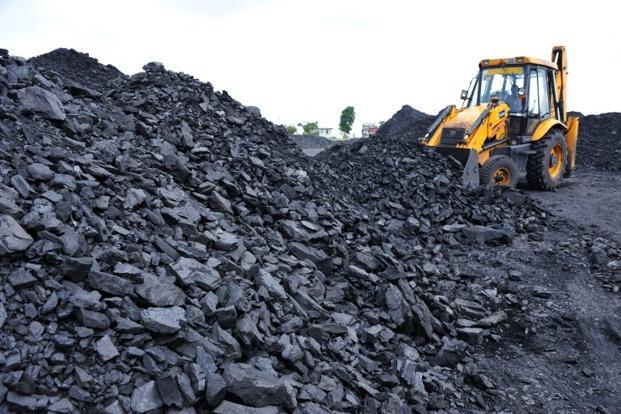
The electrical power in Pakistan is largely generated from thermal power plants. Thermal power is produced by the burning of fuels which in this case, is coal: the cheapest and most damaging of energy sources. There are currently 21 thermal power plants in service and 13 undergoing the process of proposition and construction.
To erect these power plants are inexpensive and generate millions of dollars worth of thermal energy each year. During the Kashmir earthquake many of these power stations were damaged and flooding is also destroying the electricity plants. The impact of Pakistan's thermal-energy reliance is that there are increasing levels of smog and acid rain effecting the country. Coal burning is also a major contributor to climate change which is something that Pakistan struggles with as they experience irregular precipitation and flooding.
Energy Assignment Part One
Coal, Nuclear, and Solar Energy
Coal: The advantage that using coal as a source of energy is that it is the easiest to utilize and the most affordable source. It also employs nearly 340,000 people and is therefore beneficial to the economy. In addition, for every person employed in the coal industry, this directly results in 3.5 people obtaining another job as coal is heavily relied on. Canada and America were both founded on the use of coal especially in the industrial revolution and are therefore still quite reliant on it. However, coal is not a long-term source of energy as it is not a renewable resource and the earth is damaged for it's obtainment. Workers in this industry are negatively affected by health effects including black lung and chronic bronchitis. From the heavy metals and dangerous elements that they are exposed to, workers are known to have a decreased life expectancy. Coal is also very damaging to the environment. Furthermore, strip-mining of coal destroys the genetic profile of soil, alters the lithosphere, and creates a hostile, unlivable environment for flora and fauna. Rivers also come polluted from the limestone ash associated with coal-mining. The burning of coal releases 20+ toxic chemicals into the air and ruins the atmosphere with the greenhouse gasses it emits.
Nuclear: In contrast to coal use, the utilization of nuclear power does not involve nearly as much greenhouse gasses to be released, nor does it release significant amounts of carbon dioxide. The operating costs of nuclear power plants are generally relatively low and from a single plant, huge amounts of energy is able to be generated. The issues with this method include the fact that high levels of Uranium are required although it is a rare resource. Furthermore the waste that nuclear-energy production leaves behind is dangerously radioactive and must be dealt with in the most cautious of ways so as not to release toxic chemicals and radioactivity into the world. This form of energy is very risky to use as there is no room for an accident to happen. If one does, it could effect the whole world. An example of a power-plant accident would be the incident in Fukushima in which over 100,000 people were forced to evacuate and 1000 were killed in the process of maintaining the evacuation.
Solar: Of the three, Solar energy is by far the most ideal method. Solar energy is both renewable and sustainable as there are no radioactive or rare materials needed and the utilization of sun-rays does not involve the release of harmful substances. Sunlight readily available for absorption and is so safe that its generators can be conveniently placed on rooftops. The disadvantages of this source of energy is that solar cells can be rather expensive to obtain and they require large amounts of surface area to be effective. Furthermore, if there is too much pollution already in the air, it can hinder the effectiveness of these fuel cells. Another issue is that they can usually only absorb energy in the daytime and in areas with minimal periods of daylight, this form of energy will not be the most abundant.
- It is evident that a major earthquake will occur in Vancouver as it is on the Juan de Fuca plate. This is an at-risk zone that will eventually cause destruction as others around the world of this kind have. The chilean earthquake may have had the power to trigger earthquakes in plate boundaries such as the Juan de Fuca and as more earthquakes occur around the world, more plates will be triggered. The Nazca plate in Chile moves 6 cm a year and was able to produce a 9.5 magnitude earthquake. Juan de Fuca moves at the similar fast rate of 5 cm a year and will therefore most likely create an earthquake of similar magnitude and destruction. Based on studiesof earthquakes in the pasts, seismologists have devised that earthquakes occur in approximately 200-850 years intervals. Juan de Fuca’s last earthquake occurred 1700 years ago so the chances of an earthquake happening soon are significant.
- Geological Setting: Juan de Fuca is subducted below the North american plate as it is moving underneath the continental plate. Grating against Juan de Fuca, the Pacific plate is contributes to a buildup of earthquake-causing stress. Therefore, if Vancouver were to have an earthquake, it would be due to the strain of a transform fault or subduction zone. https://www.youtube.com/watch?v=7jAVdSBUNtQ (youtube link)
- A) Liquification: In Vancouver, the highest-risk area for liquefaction is False creek. The soil is very saturated, and therefore vulnerable to this kind of disaster
Tsunami: Vancouver Island is at a high-risk area for being affected by a tsunami. Due to low elevation and costal characteristics, the area will be heavily affected by a tsunami should a large scale earthquake occur.
Flooding: Lower lands like the Fraser valley possess lower elevations and are near the coast which makes them more susceptible to being hit with the effects of flooding.
b)Social: -Communication and electrical lines may be destroyed and necessary communication will be corrupted
-People may lack basic resources like water and electricity due to pipeline/wire damages.
-Over 400 people would be killed
-Roads may be destroyed and unusable for transportation.
-Some people will become homeless
-Food could be difficult to access
-Economic: -There could be over $150,000 in damages
-Commercial buildings/factories may be destroyed
-Government money will go towards supporting affected individuals
-Thousands could lose their jobs due to damages
-Natural resources could be destroyed and no longer able to contribute to Canada’s economy
Infrastructure: -Tunnels could cave in
-Older bridges of poorer construction may fall
-The skytrain will be no-longer functional without the use of electricity(which will probably be gone until restoration) to control the magnets that allow it to run
-Water reservoirs may be contaminated
-Pavement will crack
4)To be prepared for the earthquake, Vancouver has plans to complete Granville bridge’s upgrade so that it will not be effected by seismic activity. For the social issues occurring with the issue like homelessness and lack of resources, using community disaster support hubs is part of their strategy.
Commercial buildings are now made with extra caution to become earthquake proof, ensuring the safety of people and the business. Strategies also include enhancing access to the water supply used for firefighting even after the earthquake are being planned as many pipelines will be damaged but as earthquakes are prone to fires and without water, vancouver would be helpless to it, it is essential that there is enough accessible water to fight fires.
Thursday, 18 June 2015
Waikiki
1) The volume of sand that was once abundant on Waikiki Beach has now become almost completely eroded as a result of industrialization in the 1800s when it became a popular tourist destination. Because the beach is mostly ma-made, it faces many complications that have to do with the fact that concrete-control structures such as sea walls having manipulated and changed the natural flow of water on the beach. As sea levels respond to human impact, sand is moved around differently and in this case, is gradually being covered and pulled away from the beach
2) Since 1939 there have been sand-replenishment programs there have bean over 10 replenishment attempts in which at over 300,000 cubic yards of sand were added to the beach. These attempts have served as very temporary solutions to the overall problem and have not come close to being a long-term solution. A few years, 2.2 million was spent to spread new sand over the span of 1730 feet. Less than a year afterwards, the beach continued to erode. The current plan is for the government to receive 7 cents for every 1000 dollars worth of a businesses property value and use it towards replenishment. In addition, there is a plan to float a barge over large masses of sand and transferring it via pipeline to the shore. I think that a gradual upkeep plan like this would be more effective than one large depositing of sand, however neither is a long term solution. There needs to be another strategy that can make the shoreline exist farther out.
3)Economically, the taxes of residents are used on replenishing the beach. People in the tourist industry on beaches will have a more difficult time working as less-and less- beach exists. There will be less vacation tourism in Waikiki if it's signature beaches are not there anymore. On the social side, tourists will no longer be able to enjoy the beach and resident/tourist surfers face safety hazards with the uncovering of dangerous concrete. Native Hawaiians are losing their valued area of historical significance. Tourists will not be able to have an aesthetically pleasing beach experience as the shore is full of chains, concrete, and sandbags. Environmentally, the constant replenishing and addition of sand from humans could affect ecosystems close to shore that are bombarded with foreign sand and the biomass on other beaches where the sand is extracted from may be corrupted.
Rhine River Case Study
1) The rhine river is considered the Industrial Heartland because it is one of the longest rivers in Europe and flows through six countries. It is heavily utilized for transportation of transportation of goods and raw materials throughout the continent. The river facilitates the connection between Rotterdam(largest seaport in the world)and Duisburg(largest inland port). The river is the source of drinking water for over 20 million people, supports a diversely thriving ecosystem, utilized for energy, and carries away municipal wastewater. The Rust Belt region has been formerly referred to as the industrial heartland of North America due to the presence of the great lakes.
2)Human activity has lead to this river being known as one of the most polluted in Europe. One signifiant accident affecting the river involved a chemical spill in 1986 that made it heavily contaminated. Contamination and pollution is minimally tolerated by salmon and combined with overfishing, there was a significant loss of salmon-population. After the second world war, there was a significant amount of waste contaminating the river (pesticides, heavy metals, organic chlorine compounds, hydrocarbons).The upper rhine was also straightened for navigation purposes.
3) In solving the river's problems with pollution, it would be beneficial to have less chemical plants and factories built near the river to prevent future waste-accidents. There should not be so many nuclear power plants/chemical industries around a large boy of crucial water. This would be difficult to implement as there are already many built around the river and raw materials for the power plant/ chemical industries will take longer to arrive and be more difficult to transport. Furthermore,
Furthermore, there could be more fish-habitat restoring programs to attempt to restore the ecosystem. This would be difficult as the river is already heavily polluted.
Case Study: Land Subsistence in the American Southwest
A) The greatest cause of land subsidence is over drafting aquifer. This occurs when ground water is pumped from areas with clay/silt beds around it. These beds lose support due to loss of water pressure. As the water is gradually drained from the clay/silt, the beds are compressed and the land is permanently lowered and compacted. Other Causes include human activity such as the underground pumping of resources (water, oil and gas),sinkholes,soil drainage, and mine collapse.
As human development increases, more and more resources are taken from the earth. The more resources that are taken from the earth, the more he earth is damaged.
B)Land subsidence can be hazardous to construction and development. It can cause damage to buildings and infrastructure as well as pipelines, sewage, and drainage systems. Transportation is effaced as bridges,roads, railroads, can be ruined. Well casing failure is also an issue. Furthermore, as the land lowers in coastal areas, the tide may advance to areas which were never before below tide level. Earth fissures(cracks/openings in the earth) may also occur as a result of land subsidence.
C) Some ways to prevent land subsidence would include drafting aquifers where there are less clay and silt beds. Soil drainage can be minimized and underground pumping can be more spread out and gradual causing a weaker impact on the soil. Mines can be more strongly reinforced and filled in before use so as not to accidentally collapse and lead to subsistence.
Thursday, 11 June 2015
Water Use in Agriculture
Surface Irrigation
Pros:
-Simple to operate
-Inexpensive
-Easily utilized by developing countries
-Less technology and tools required
Cons:
-Roughly 1/2 of water is not transported to crops and is wasted
-Water is lost from Runoff
Drip Irrigation
Pros:
-More efficient in watering fruits/veggies than flooding
-Less evaporation
-Water is applied directly to the root and is more nourishing to plant
-Water is easily directed
Cons:
-Equipment is more costly than flood irrigation
-Installation can be troublesome
-Can require significant management time
Spray Irrigation
Pros:
-Less wasteful than surface irrigation
-Offer controlled, thorough, and automated watering intervals
Cons:
-Requires costly machinery
-High levels of evaporation occur
-High pressure systems are lest precise and more wasteful
In my opinion, drip irrigation is the ideal option for farmers to utilize. The fact that it is least wasteful makes it less expensive in the long-run which accomodates for the initial costliness of equipment. Furthermore, considering the many issues of water shortage around the world, it is very important to conserve as much water as possible and this system definitely does that well. Because the flow is very controlled and applied directly to the root, more money and water is saved in this method than the spray or surface methods. Utilizing rows of rubber tubes would also reduce manual labor required for watering plants in contrast with surface irrigation. Therefore, i think that if countries have the financial ability to invest in drip irrigation, It would be the most beneficial method of irrigation to use.
Pros:
-Simple to operate
-Inexpensive
-Easily utilized by developing countries
-Less technology and tools required
Cons:
-Roughly 1/2 of water is not transported to crops and is wasted
-Water is lost from Runoff
Drip Irrigation
Pros:
-More efficient in watering fruits/veggies than flooding
-Less evaporation
-Water is applied directly to the root and is more nourishing to plant
-Water is easily directed
Cons:
-Equipment is more costly than flood irrigation
-Installation can be troublesome
-Can require significant management time
Spray Irrigation
Pros:
-Less wasteful than surface irrigation
-Offer controlled, thorough, and automated watering intervals
Cons:
-Requires costly machinery
-High levels of evaporation occur
-High pressure systems are lest precise and more wasteful
In my opinion, drip irrigation is the ideal option for farmers to utilize. The fact that it is least wasteful makes it less expensive in the long-run which accomodates for the initial costliness of equipment. Furthermore, considering the many issues of water shortage around the world, it is very important to conserve as much water as possible and this system definitely does that well. Because the flow is very controlled and applied directly to the root, more money and water is saved in this method than the spray or surface methods. Utilizing rows of rubber tubes would also reduce manual labor required for watering plants in contrast with surface irrigation. Therefore, i think that if countries have the financial ability to invest in drip irrigation, It would be the most beneficial method of irrigation to use.
Subscribe to:
Posts (Atom)